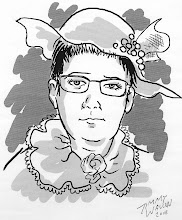

Sophie's ordeal had made her aware of the lack of legal rights for women and especially single unprotected women. She becan holding pulic lectures advocating for better womens rights first 1849 in Stockholm and later Uppsala and in the following years she visited Malmö,Gothenburg and Copenhagen.
She got a lot of audience, mostly young men but often met with criticism because of her lack of “ladylike behaviour” Sophie was ahead of its time and deviated from the ideal of the passive, good womanhood. She had dared to do that no one else before her had done, namely, to use police force to defend their right not to be assaulted.. Maybe she was considered to forward as she frequently advertised their activities in the press.
her litterary production was little and and her talent lacking . Among her works include:
Emanciperade fantasier i vers och prosa(Emancipated fantasies in verse and prose) 1850)
Fonsterbarnets avslöjande genealogi (Pictures from life or Foster Child and its genealogy) (1852).
Sophie's thoughts were not revolutionary. She believed in the institution of marriage but thought women should have the right to a good education and to move freely in the community without having to bow to unnecessary conventions or be molested.
Emigration and life in the US
In1854 Sophie emigrated to the United States. She sailed with the bark Columbia from Hamburg with 200 German emmigrants. and arrived in New York August 5, 1854 In the lists of arrival she is listed as seamstress with her she had a two and a half year old child, if it was her own child, or if she has a child on behalf of another is not clear .
In 1855 Sophie married the German music professor Eugene Adolphe Wiener (ca1813-1888). They had two sons, Gabriel (1856-1932) and Victor Bolivar (1862-1932) The family settled in New York most of the time at different addresses in Brooklyn
Inthe Us federal census Census 1860 Sophie's husband is listed as music professor and in 1870 he is listed as as pianist and Sophie as musician
In 1861 Sophie published a pamplet called Woman's Destiny and Man's Duty Sophie and her husband separated around 1878 around 1878. In the mid and late 1880s Sophie held lectures on various topics, for example feminism, often her piano playing son Victor Bolivar performad with her, In 1887 Victor married a s girl of modest family background .She that was not good enough,for him according to Sophie who told the local newspaper, The Brooklyn Daily Eagle that he couldhave married a girl worth 60 000 dollar .. In 1888 Sophie became a widow according to the newspaper, he had devoted much of his time to think about a strategy how people could avoid bumping into each other on the street. 1893 Sophie suggested in the nespaper that passenger ships that sailed across the seas to oughto always sail in pairs if there were an accident they should be able to assist eachother.
Funeral and death
Sophie Sager died February 28, 1901 in her residence at 151 Jefferson Avenue in New York, According to the death certificate, she was 76 years old .She was buried two days later at her husband's side at the Greenwood Cemetery. According to an obituary d she was a famous lecturer
A year later, February 26, 1902 a memorial service over her was held inover her in the Swedish-American Bethlehem Lutheran Church in Brooklyn by Pastor J Jacobson.
The late memorial service supposedly gave rise to the rumor she'd died in 1902
Sophie's two sons died in 1932 Gabriel was unmarried, Victor had 4 children reaching adulthood
Sophie was ridiculed in her own time by her contemporaries.Today she is often seen as a early pioneer in the fight for womens rights. An her cause that a woman have the right to go unmolested in the public sphere is as actual now as it was then. However, Sophie was according son Gabriel against women's suffrage Today there is a street named after her in Enskededalen outside Stockholm.


